
 Fortune Cookies


Indian Solitaire: Free Online Card Reading
Deal the cards, then find two neighbors holding halves of the same picture. Turn them until the picture is whole and the reading opens.
Matched pictures
Find two neighboring cards that hold halves of the same picture, then turn them until the picture is whole.
Indian Solitaire is a reading you assemble with your hands. Twenty-five cards, each cut into four, and fifty pictures cut in half: a wreath, a sail, an eagle, a key. Nothing matches at first. Then you begin to turn the cards, one after another, and out of the scattered halves whole symbols appear — and with them your reading, on love, on work, on whatever you came here holding.
 All Readings
 Tarot
TarotSimple instructions
How to play Indian Solitaire
- 1
Hold your question
Think of one thing you want to understand. Ask it out loud or keep it to yourself — either works, as long as it is one question and not five.
- 2
Deal the cards
Select Start the Reading. Twenty-five cards fall into a five-by-five square. Some halves will already have met on their own; those count, and they are usually the loudest part of the spread.
- 3
Turn, do not move
Select a card to turn it a quarter turn. Cards never change places — only their direction changes. Work along the rows and columns, looking for two touching sides that carry halves of one picture.
- 4
Read what came together
Every whole picture opens its meaning under the board. Read them in the order you found them, and keep in mind where each one fell: the top row is the week ahead, the bottom row is a month out.
How to read your spread
Getting a picture to come together is only half the work. The rest is reading it — turning a handful of symbols into something that actually answers the question you asked. Every spread is different, and knowing how to hold the symbols together is what makes a reading useful instead of decorative.
Three principles
1. The order matters
Remember which picture you found first. The first pair shows how things begin, the last shows how they end. Read them as a sequence and the spread starts telling a story rather than listing adjectives.
2. Your question sets the frame
The same symbol reads differently depending on what you asked. Reading about work? Stay with the professional side of the meaning. Reading about your personal life? Look for the part that speaks to feeling.
3. The whole picture
Do not read the symbols in isolation. Together they form one story, and each matched picture is a chapter in it.
A worked example
Say you are wondering whether to put money into a friend's new venture. You deal the cards and three pictures come together:
- Bell (found first) — good news
- Treasure Chest (found second) — savings and wealth
- Ladder (found third) — growth
How to put that together:
🔹 The Bell says welcome news about the venture reaches you soon — another investor, perhaps, or a better offer than the one on the table. The card also advises keeping it quiet for a while.
🔹 The Treasure Chest points to money that stays. Not a quick return, but income you can actually hold on to.
🔹 The Ladder closes the reading with a promise of growth. The investment becomes a step up rather than a one-time win.
Taken together: the spread is in favor. Good news first, real money second, and a new level after that.
Timing: what the rows mean
Indian Solitaire looks one to two months ahead. To place an event in time, note the row a matched picture fell in:
- Row 1 — the coming week
- Row 2 — days 8 to 14
- Row 3 — days 15 to 21
- Row 4 — days 22 to 28
- Row 5 — week five and beyond, days 29 to 40
Back to the example. If you dealt the cards on March 10:
- Bell (row 1) — the good news arrives March 11 to 17
- Treasure Chest (row 3) — real money starts moving in late March
- Ladder (row 4) — the growth shows in early April
Reading deeper
Neighboring cards. Look at the symbols lying next to a matched picture. They add detail. A Camel beside the Treasure Chest strengthens the money reading and points to a larger sum.
Broken pictures. These are halves that belong together but are separated by a card between them. They show extra circumstances or obstacles along the way. You can leave them out of a simple reading, but for a close one they matter. A broken Scales sitting between two matched pictures, for instance, can mark a difficult choice ahead.
Hard symbols beside kind ones. The combination changes the reading. A Padlock next to the Treasure Chest means the money arrives, but late or with strings attached.
Symbols that swing both ways
A few cards change their meaning entirely depending on their company:
- Anchor — stability beside good cards, stagnation beside hard ones
- Scissors — either the end of something or release from it
- Road — a journey, or simply a change of life, depending on context
Rare symbols such as the Rainbow and the Sun come up seldom and carry strong good fortune on their own. Their appearance is worth noting.
Trust your first reaction
Reading Indian Solitaire is not a lookup exercise. Pay attention to what you feel the moment the spread appears: the first impression often carries the right interpretation before you have reasoned your way to it.
If one card gives you a strong reaction, give it your attention — even if it never matched with anything. Its presence can be the signal.
Indian Solitaire: twenty-five fragments of fate
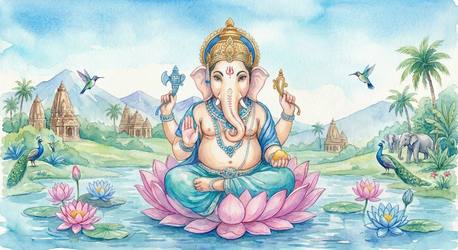 "In a drop of dew the whole ocean is reflected," wrote Kalidasa, the great Sanskrit poet, in the fifth century. He could not have known that centuries later a strange oracle-puzzle would travel out of India and around the world: twenty-five cards, each divided into four parts, each fragment holding a piece of a larger picture, exactly as in Kalidasa's drop. Just pictures, you might think — a sail, an eagle, a crown, the sun. Then you pick up a card and turn it, and the world shifts. One movement, and the sail fills with wind. Another, and the eagle spreads its wings above the sun. Out of chaos, a pattern. Out of scattered fragments, a reading.
Who would have guessed you were holding a cosmos in your hands?
The visual magic of Indian divination
India is the home of visual magic. Long before Tarot, long before runes and casting bones, Indian thinkers understood something: to look into the future you do not listen for an answer, you look for one.
Mandalas — sacred geometric patterns — were used for meditation and insight in the first centuries of our era. The Shri Yantra, built from nine interlocking triangles, was treated as a map of the universe. Monks in Buddhist monasteries spent hours contemplating symmetrical patterns to see past visible form into invisible truth. And each morning, on the thresholds of Indian houses, women drew kolam — designs in rice flour and colored powder — inviting good fortune to step across. Making visual order out of chaos is one of the oldest rituals there is.
Indian Solitaire, whether laid out on a table or played online, is a direct descendant of that habit. Twenty-five cards form a square, five by five, and in front of you lies a broken mirror of the world. Images are torn, lines cut off, patterns refusing to meet. It is much like life: the pieces are all there, but the picture is not. And so you start to turn the cards, one after another, listening to something hard to name — intuition, or something larger.
The mystery of twenty-five
The number of symbols is not an accident either.
In Samkhya philosophy — one of the six classical schools of Indian thought — there is a teaching about twenty-five tattvas, twenty-five principles from which the universe is woven. From prakriti, primal matter, to purusha, pure consciousness. Twenty-five steps of being, twenty-five threads in the fabric of what is real.
Each card of Indian Solitaire is one such thread. Five by five is the square of five, and five in Hindu tradition is the number of completeness. The pancha-mahabhuta, the five great elements: earth, water, fire, air, and ether. Everything is made of them. Five senses, five fingers on the hand that turns the card.
Consider Pachisi as well, the ancient Indian game whose name comes from pachis — Hindi for twenty-five. The Mughal emperor Akbar the Great (1542–1605) is said to have played Pachisi on the marble courtyard of Fatehpur Sikri, with living women from his court moving across the squares instead of pieces. Game and fate, amusement and divination: in India there was never a wall between them.
And the four sides of every card?
Four yugas — the great ages of the world in Hindu cosmology: Satya, Treta, Dvapara, and Kali. Four Vedas — the sacred books. Four aims of a human life, the four purusharthas: dharma (duty), artha (prosperity), kama (pleasure), and moksha (liberation). Four directions, faced by the four heads of Brahma the creator.
To turn a card is to look at your fate from another side. It echoes the Jain teaching of anekantavada: truth has many facets, and to see it whole you have to turn your gaze.
The sacred dance of turning
The cards have to be turned, and that is not incidental. Rotation is a sacred gesture in India. The Sanskrit word chakra means wheel. Seven chakras — seven wheels of energy — turn in the human body, from the base of the spine to the crown. The Dharmachakra, the wheel of dharma, is Buddhism's central symbol, set in motion by the Buddha's first sermon. The wheel of samsara, the endless cycle of rebirth, turns until the soul is released. And Shiva Nataraja, whose bronze figure is known the world over, creates and destroys the universe in a cosmic dance — and that dance, too, is a turning.
Every time your fingers turn one small card, you are repeating that gesture without knowing it. Perhaps that is why, at the moment the halves meet, there is that flash of recognition, the quiet "there it is," as though for a second you saw through maya, the great illusion, to the real order of things.
The part equals the whole
"Tat tvam asi" — "Thou art That," say the Upanishads. The part equals the whole. Every fragment contains everything. The twenty-five cards of Indian Solitaire are divided, yet they make one image, just as the individual soul, atman, is part of the world spirit, Brahman. To complete the spread is to feel that unity for a moment.
In the Mahabharata, the epic Indians call the fifth Veda, a game of dice decides the fate of a kingdom. Prince Nala, under the spell of Kali, loses everything at dice: his throne, his wealth, his freedom. He loses even his beloved Damayanti. But he passes through fire, through servitude, through disfigurement, and he returns. He beats his brother at the same game. The god of misfortune withdraws and drifts away like smoke. Damayanti recognizes her Nala in a scarred stranger, and that too is a moment of matching, of seeing the whole in what was broken. Great is the strength of Damayanti's love. And great is the strength of a pattern surfacing out of chaos.
Rabindranath Tagore, the Nobel laureate, wrote that what you are looking for is looking for you. That is the philosophy of this old reading in a sentence. You are not picking the pictures; the pictures are picking you. Your hands know which way to turn. Your eyes catch the match before your mind registers it. Indians call this darshan — sacred seeing, the contemplation of truth.
Patanjali taught in the Yoga Sutras that yoga is the stilling of the fluctuations of the mind. When the mind quiets, the answer surfaces. Turning the cards slowly and patiently, forgetting the time, is a small meditation — a quiet yoga at the kitchen table.
How to read Indian Solitaire: the practice
In India the best hour for questioning fate is said to be sandhya, the twilight, when the day has not quite gone and the night has not quite come. In that in-between hour, they say, invisible gates open. Or brahma muhurta, the hour and a half before dawn, the time of the gods, when the silence runs deepest. Still, as Tagore put it, the butterfly counts not months but moments, and has time enough. A moment is enough. One turn of a card is enough. And for anyone reading online, the moment is always here.
So: settle. Ask your question, silently or out loud, whichever suits you. Lay out twenty-five cards in a square. In front of you is chaos — fragments, pieces of a pattern that has not arrived. Start turning. Do not hurry; let your hands and eyes lead. Each card has four possible positions, which puts the number of possible arrangements past a trillion. A trillion patterns, a trillion readings, and only one of them is yours.
When the lines begin to meet, when a whole image surfaces out of the pieces, look closely and read what the symbol is telling you. A Wedding Ring means a union soon, a bond growing stronger. A Ladder means a new step, growth, a climb. A Bonfire means inspiration and creative energy about to catch. An Anchor means solid ground and steadiness in a rough season. And if the pattern came together easily, without effort, the way is open. If you had to search a long time for a match, there is work ahead — but the reward is worth the patience.
From the Bhagavad Gita: as a person puts on new clothes and discards the old, so the soul enters new bodies and leaves the worn ones behind. A card turns, and the image is renewed. The old pattern goes, the new one arrives. Every spread is a small rebirth, a small death of chaos and a birth of order.
Twenty-five fragments of fate are waiting. This Indian Solitaire reading is free — deal the cards here and now.
Card reference
Indian Solitaire card meanings: all 50 symbols
Twenty-five cards, fifty symbols. Below is what each one means when its halves come together in your spread, and how it shifts when certain cards lie beside it. When a picture opens during a reading, its full entry is one tap away.

Anchor
Stillness or stability? That depends on the company it keeps. The Anchor stops the movement and puts your plans on hold. Beside kind cards it reads as rest you have earned, a settled life, roots going down. Beside harsh ones it reads as being stuck with no way to move forward. In a love reading it favors the long, steady relationship over the stormy one. In a work reading it marks the season for holding your position rather than chasing a new peak. Sometimes a stop is not the end of the road, only a chance to catch your breath. Next to the Hot-Air Balloon the situation is frozen for a while yet, so settle in and wait. Next to the Key the anchor is already coming up and you will be under way soon.
Bed with a Heart
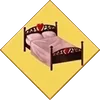
Passion and closeness. The card promises a night you remember, a strong physical pull, desire that runs both ways. In a love reading it speaks of an intimate life in good order. For someone you have only just met, it means attraction from the very first meeting. Look at the cards around it to see whether that pull grows into something more or stays exactly what it is. A broken Bed with a Heart can point to trouble in the bedroom or to desire that has cooled. Next to the Wedding Ring the attraction has a future and is heading toward commitment. Next to the Eyeglasses someone is not being honest about what they want from this.
Bell
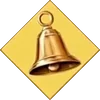
Good news is on its way. A call, a message, word that makes your heart beat faster. But the card adds one piece of advice: do not rush to tell everyone. Keep the good news to yourself for a few days and you will understand why. In a work reading it is a favorable word about a project or an offer. In a love reading it is a message from the person you are thinking about, or news that touches your relationship. Next to the Weeping Eye the joy is short-lived, or something that follows takes the shine off it. Next to the Treasure Chest the news is about money and it is worth waiting for.
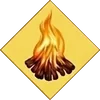
Bonfire
The fire catches. A bright, unexpected infatuation that turns your life around. This is not quiet tenderness — it is a flame that draws you in and burns at the same time. In a love reading it means new, turbulent feelings, or passion coming back into a relationship you already have. Elsewhere it can stand for creative fire and a surge of energy. The card carries a warning as well: everything is about to be different, nothing will go back to the way it was. Whether that is for better or worse, the cards around it will tell you. Next to the Two Hearts the fire is mutual and it warms rather than burns. Next to the Scissors the flare-up ends in a clean break.

Broken Necklace
A missed chance, a thread of fate snapped. What might have happened will not happen now — the moment has passed and the opening has closed. In a love reading it is a break-up, a disappointment, the end of a romance. You may still be holding on to something that is already over, knocking at a door that will not open. The card can also point back at the past: look at the symbols around it and they will tell you the story of what was lost. Sometimes you have to let go to free your hands for what comes next. Next to the Burning Candles the loss makes room for hope, and something better is already on its way. Next to the Clock you acted too late, and timing was the whole problem.
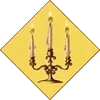
Burning Candles
Light at the end of the tunnel. Hope comes back into your heart like the first ray of sun after a long night. You believe in good things again, and that belief pulls the change toward you. The dark stretch is ending, and morning is ahead. In a reading about the near future it means a rise in optimism and energy. In a reading about wellbeing it marks the beginning of recovery, in body and in spirit. The card can also mark a spiritual awakening or an important realization. Next to the Sun it builds into a powerful charge of energy and joy — a season of real flourishing. Next to the Weeping Eye it promises comfort: after the tears come relief and fresh hope.
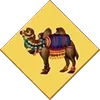
Camel
Money is coming your way. A symbol of plenty, of comfort and material wellbeing. This is the card of people who are not afraid of hard work and are properly paid for it. Expect a welcome payment: a bonus, a good deal, unexpected income. In a work reading it promises a stretch of financial growth. A broken Camel points to spending instead — a big purchase or an investment. Sometimes you have to spend in order to earn more. In a love reading it hints at the practical side of a relationship. Next to the Key it opens access to a new source of income, perhaps a side job or an offer worth taking. Next to the Crown the money arrives through status and influence.
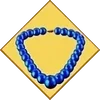
Clasped Necklace
A trap. Someone is working against you and a setup is being prepared. There is still time to head off the trouble — the necklace is clasped, but not yet pulled tight. The card says stay alert, do not trust blindly, think the situation through. The symbols around it will show you where the threat comes from and what kind of trouble it is. In a work reading it is scheming by colleagues or by management. In a love reading someone is working against you as a couple. Next to the Queen of Spades you already know who it is, and it is a woman in your circle. Next to the Key you see the trap in time and step around it.
Clock
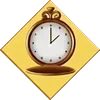
Time is the best adviser here. The card asks you not to rush — to pause, to give yourself room to think and events room to develop. Whatever the question, this is a recommendation to slow down. Hurry is the enemy of a good outcome right now. In a love reading, do not force anything and let the relationship ripen at its own pace. In a work reading, do not decide in the heat of the moment. Difficult cards nearby will show you exactly where you are moving too fast and what it may cost. Next to Lightning there is a paradox: a sudden event forces you to slow down and rethink your plans. Next to the Key the answer arrives on its own when the time is right, so do not push it.
Coffin
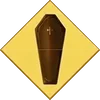
A heavy card, and there is no point pretending otherwise. It stands for an ending, for decline, for what cannot be brought back. It can point to health worries, to hopes falling through, to serious obstacles. As an answer to a yes-or-no question it is a plain no. But remember: the end of one thing is always the beginning of another. Sometimes you have to let go of what has died to make room for what is alive. In a relationship reading it can mean the connection has run its course. Next to the Scales it is a warning — the wrong decision will make things worse, so take real care. Next to the Clock time is not on your side: act quickly or do not act at all.
Crown
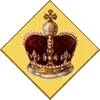
The summit. Success, authority, recognition, ambitious plans coming good. This is the card of people who are not afraid to aim high and who get there. In a work reading it promises a career triumph or a leadership role. In a love reading it means a wedding, a formal union with the person you love. A broken Crown means the goal is out of reach for now — either something is in the way or the strategy is wrong. Even broken, though, the card keeps its potential for success. Next to the Ladder the rise is steady and well earned. Next to the Padlock the recognition you deserve is being held up by someone else's decision.
Dove
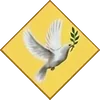
Pure loyalty and sincerity — that is what this bright card stands for. There is someone in your life you can trust completely: a friend who will not betray you, a partner who stays through the good and the bad. The Dove is a sign of peace, in your own mind and in your relationships. In a love reading it means calm harmony with no storms and no drama — quiet happiness that runs deep. In a reading about friendship it confirms that the person beside you is sincere. Next to the Wreath your loyalty is recognized, and recognized publicly. Next to the Jack of Hearts it confirms that the man in question means exactly what he says.
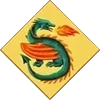
Dragon
Power and energy. An enormous force that can build or destroy. The card marks a period of extraordinary drive, ambition and possibility — you could move mountains right now. In a work reading it promises a breakthrough, a powerful push forward, big projects finally moving. In a relationship reading it means passion, intensity, vivid feeling. Be careful, though: dragon energy is impulsive and can turn destructive if you do not keep hold of it. Rushed decisions, flashes of temper and too much pressure can do real damage. Next to the Clock the dragon is tamed — learn to aim that energy and do not hurry. Next to the Key your strength finds the right target and carries you to success.
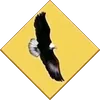
Eagle
A powerful patron. Someone above you sees further than you do and can help you rise: a wise boss, an influential family friend, a mentor who has already made it. In a work reading it is the person who notices your talent and opens doors. In a reading about the future it is a meeting that changes your life for the better. A broken Eagle warns that you could lose that support through a quarrel or a misunderstanding. Value the people who help you fly. Next to the Crown the patronage leads straight to a position of real standing. Next to the Queen of Spades someone is working to turn your patron against you.

Envelope
News that changes the shape of things. A letter, a message, a call — information that will affect your plans and your decisions. In a work reading it usually concerns business: an offer, a contract, an official notice. In a love reading it is word from the person you care about, or news that touches your relationship. The news can be welcome or worrying, so read the cards around it. The Envelope is always information you cannot afford to ignore. Next to the Hot-Air Balloon the letter you are waiting for is delayed and the news arrives late. Next to the Bell the message is a good one.
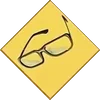
Eyeglasses
Two faces. Someone close to you is wearing a mask: one face in company, quite another behind your back. The card warns of hypocrisy and insincerity. Somebody says pleasant things to you and criticises you elsewhere. In a work reading it is a colleague or a manager playing a double game. In a relationship reading a partner or a friend is hiding what they really intend. The cards around it will tell you who is being false and what the deception is about. Next to the Question Mark someone close to you knows more than they are saying. Next to the Queen of Spades the two-faced person is a woman in your circle.
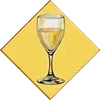
Glass of Wine
Good company and glasses clinking. Time with people you enjoy is coming: a celebration, a party, or a long evening of talk. In a love reading it means a romantic dinner or a noisy celebration. In a work reading it promises meetings in a relaxed setting, where things get settled easily. One note of caution: if the Jack of Hearts lies beside it, someone close to you may be drinking more than is good for them — do not brush the sign aside. Next to the Sun the joy is doubled and the celebration is genuinely warm. Next to the Horseshoe the party brings real luck, and the good time has good consequences.
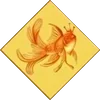
Goldfish
A wish granted. As in the old tale, the fish is ready to give you what you asked for — so be careful how you word it. The card promises that goals come easily, as though everything arranges itself. In a reading about the future it means the thing you dream of is close. In a work reading it is unexpected luck that arrives without much effort on your part. But remember the tale: every wish has its price, and the result is not always what you pictured. Next to the Key the wish comes true exactly as you imagined it. Next to the Wreath the outcome goes beyond what you hoped for — a real triumph.
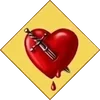
Heart with a Dagger
A blow straight to the heart. Deep pain from betrayal, from deceit, from being let down by someone close. This is not ordinary sadness but a genuine wound. In a love reading it is unfaithfulness or the kind of ending that really hurts. In a family reading it is betrayal by your own people, the feeling of having been used. Pain like this can empty you out for a while. Time does heal, but right now it hurts. Next to the Burning Candles the healing has already started, even if you cannot feel it yet. Next to the Skull the hurt is draining you, and you need rest before you decide anything.
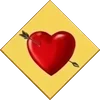
Heart with an Arrow
Love that is not returned. You love, but you are not loved back — one of the saddest feelings there is. The arrow has gone through the heart, and the feeling is one-sided. In a relationship reading, the declaration will not get the answer you want and the pursuit will not work. In a work reading it is disappointment in a direction you chose: a project or an idea you gave your heart to, and nobody noticed. What to do? The cards around it will tell you whether to keep going or let go and move on. Next to the Two Hearts the feeling may yet become mutual — it is early. Next to the Broken Necklace the moment has passed, and holding on only costs you.
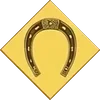
Horseshoe
Luck is on your side. A lucky break, a good run, circumstances falling into place. The card says that you are simply a fortunate person and that luck is especially kind to you right now. In a love reading it is a chance meeting that turns out to matter. In a work reading a piece of luck opens a door. The Horseshoe does not promise grand goals or ambitious plans — it is about the ease with which things arrange themselves. Enjoy this stretch while the stars are lined up for you. Next to the Stone luck carries you past an obstacle you thought was immovable. Next to the Glass of Wine the good fortune arrives in good company.
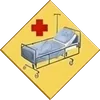
Hospital Bed
A card that asks you to pay attention. It points to health, to exhaustion, or to an accident. In a reading about the future it is a signal to take care of yourself and not to wave away symptoms. In a reading about a particular person it can point to their illness. In a love reading it sometimes hints at an unhappy intimate life. Do not be frightened by it: it works far more often as a warning than as a verdict. Take care, listen to your body, rest. This is a card, not a diagnosis — for anything that actually worries you, see a doctor. Next to the Burning Candles recovery has begun. Next to the Clock the message is simply: slow down before your body makes you.
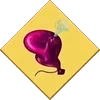
Hot-Air Balloon
The situation is suspended in mid-air, between earth and sky. The cards are quiet because the future has not settled yet — there are too many moving parts. Perhaps today is not the day for a reading, or the question troubling you is not ripe for an answer. Fate seems to be saying: wait, it is not time. In a reading about a specific situation it means events are still taking shape. Do not force the ending — it will come when it is ready. Next to the Clock the message is doubled: time is working for you, so be patient. Next to the Scales it is too early to decide, because you are missing something important.

House
Real change at home and in your private life. It can be a move to a new place or a shift in how things stand with the people you live with. In a family reading the card announces events that rearrange the usual order. In a love reading it can mean a family being made or a family coming apart — the neighboring cards decide which. The House stands for your own space and your closest ties, so the change will touch what matters most. Next to the Padlock the trouble at home has reached a deadlock and the atmosphere is heavy. Next to the Key old household conflicts are resolved and peace returns.
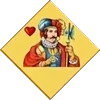
Jack of Hearts
A man who loves you, or a loyal friend you can count on in any situation. This is the card of real feeling, without pretence or double-dealing. If the symbol is broken, the relationship has cooled and there is misunderstanding between you; the cards between the halves will show you the reason. Even the separate halves matter — they show what this person truly thinks and feels. In a love reading, the Jack is the person you love. In a reading about the future, it is a meeting with someone dependable. Next to the Key the relationship comes out of its difficult patch and the problems are resolved. Next to the Stone the feeling is being tested by serious obstacles.
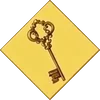
Key
The solution is found. There is a way out, and it is closer than it looks. The card promises that the problem gets resolved, that new possibilities open, that a tangled situation becomes clear. In a reading about the future it means things develop in your favour before long. In a work reading it means access to resources, to the right people, to the information you were missing. A broken Key says the answer is slipping away — you may be looking in the wrong direction. Note which row the card falls in; that will tell you about timing. Next to the Coffin there is a way out even of a critical situation, so do not give up too early. Next to the Hot-Air Balloon the uncertainty clears soon and the picture comes into focus.

King
An influential man in your life — a boss, a father, a patron, or simply someone in a senior position. With favorable cards around it, the card means help and backing from him. In a work reading it is a manager or an important business partner. In a love reading it can stand for a settled, serious man with real intentions. The King is a figure of authority; the symbols around him decide what part he plays in your story. Next to the Wreath his backing takes you all the way to success. Next to the Padlock the influential man is blocking your plans or refusing to help.

Ladder
Up the ladder you go. The card of growth, development and movement toward bigger goals. In a work reading it promises a promotion, a new position, professional recognition. In a love reading it means the relationship moves up a level — from dates to serious plans. The Ladder is always development, progress, movement forward and upward. It can also stand for personal growth, spiritual development or study. A broken Ladder points to a stall in your progress or obstacles on the way up. Next to the Treasure Chest the rise brings money with it. Next to the Padlock the next step is blocked for now and you will need patience.

Letter in a Ring
News that comes too late. Word that arrives when it no longer matters. A husband declares his love and you no longer believe him. A job offer lands after you have taken another. This is the card of time missed — of something that mattered yesterday and is worth nothing today. In a relationship reading it is a late explanation or a late apology. In a work reading it is an offer that has lost its point. Next to the Broken Necklace the door really has closed, and there is nothing left to answer. Next to the Clock the delay was not your fault, but the result is the same.
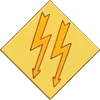
Lightning
A bolt from a clear sky. A sudden event that catches you off guard and changes everything at once. More often the card announces an unpleasant surprise, though not always. In a reading about the future it is a sharp turn you cannot prepare for. In a relationship reading it is unexpected news from a partner or an abrupt break. The cards around it will show you where the shock comes from and what it leads to. Lightning strikes fast — you will not have time to think it over. Next to the Clock the shock forces you to stop and reconsider your plans. Next to the Key the sudden turn actually solves something that was stuck.
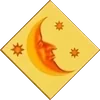
Moon and Stars
The magical card. It can point to important events with surprising precision, sometimes down to particular days. Note the row it falls in and the symbols beside it — together they reveal what is coming. The Moon and Stars are also tied to intuition, to vivid dreams, to knowledge you cannot quite explain. Listen to your inner voice right now: your sixth sense is sharp. In a love reading it can mean a meeting that changes everything, within the period the row indicates. Next to the Sun there is double magic: intuition and energy working together. Next to the Question Mark the answer is already inside you — trust what you felt first.
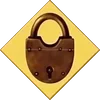
Padlock
A dead end. The roads are closed and there is no way through in sight. This is one of the hardest cards — a symbol of obstacles that will not move, of prohibitions, of situations with no exit yet. In a relationship reading it means a break or the impossibility of being together. In a work reading it is projects blocked, refusals, doors shut. Do not despair: the Padlock describes how things stand now, and beside favorable cards the situation can change. Sometimes a closed door is protection from the wrong road. Next to the Wreath the standstill ends in success and the lock opens. Next to the Scales the deadlock comes from your own indecision — make the choice and things will move.
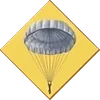
Parachute
A leap into the unknown. You have a bold, even daring move ahead of you, and it will take nerve. But the card promises the parachute opens and the landing is soft. The risk is worth taking. This is a call to act, to stop being afraid, to trust the moment. In a love reading it is a brave step toward your feelings. In a work reading it is a risky but promising offer. A broken Parachute warns that you may not bring yourself to jump and will lose the chance. Sometimes it is better to risk it and regret it than never to risk it and regret that for years. Next to the Stone the bold move is exactly what gets you past the obstacle. Next to the Penguin hesitation is the only thing standing in your way.

Penguin
Frozen by indecision. The card describes someone who doubts everything, who is afraid to take the step, who lets chances go by out of fear and uncertainty. If the reading is about you, it is a blunt but fair assessment: stop being afraid and start moving. If it is about someone else, it describes their nature. The Penguin often turns up beside the cards of missed opportunity — a broken Scales, a broken Parachute — showing that hesitation has already cost something. Next to the Clock the waiting is at least sensible for now. Next to the Broken Necklace the chance has already gone.
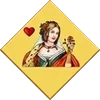
Queen of Hearts
A close friend, a sister, or simply a woman who genuinely wishes you well. The card stands for female support, warm and trusting ties, readiness to help. In a reading about the future it means you have a dependable ally. If the symbol is broken, there may be a passing misunderstanding with a friend — but it does not speak of betrayal. In a relationship reading it can point to the part a friend plays in your private life, as adviser or as witness to something important. Next to the Wreath your friend is glad of your success, sincerely and without envy. Next to the Queen of Spades there is conflict between two women in your circle.
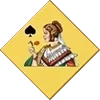
Queen of Spades
An envious, ill-wishing woman in your circle. It may be a mother-in-law, a colleague, a neighbor, or even someone who passes for a friend. The card says that somebody wishes you harm, spreads talk, or simply enjoys your setbacks. In a work reading it is a rival among your colleagues. In a family reading it is conflict with an older woman. Keep your eyes open: the Queen of Spades rarely acts in the open and prefers to work behind the scenes. Next to the King she may have a powerful protector, or she may be working on a man with authority. Next to the Queen of Hearts the conflict between two women comes into the open — the confrontation cannot be avoided.

Question Mark
A riddle that will not leave you alone. Something is slipping past your understanding, and that something matters. The card points to a gap in the information, to things unsaid, to a secret. Perhaps somebody is hiding the truth; perhaps you are afraid to ask the question yourself. In a relationship reading it is a partner's secrets or unclear intentions. In a work reading it is the hidden motives of colleagues or management. Look at the cards around it — they can tell you where to look for the answer. Next to the Eyeglasses someone close to you knows more than they are letting on. Next to the Moon and Stars the card advises you to trust your intuition: the answer is already in you.

Rainbow
Light-hearted joy. A stretch of ease, when your spirits lift and life looks good for no particular reason. The card appears rarely, so on its own it means luck. In a work reading it is an interesting, creative, well-paid role or project that brings pleasure as well as money. In a love reading it is an easy, happy relationship without drama. This is a time to enjoy your life and to be grateful for every bright day. Next to the Sun the good fortune is doubled — a genuinely golden stretch. Next to the Weeping Eye it promises that the sadness passes and color comes back.

Road
The way is open. A journey, a move, or an important trip that changes the course of events. In a reading about the near future the card promises movement and change for the better. In a work reading it is a business trip or new possibilities in another city. The Road is always forward motion, a way out of a standstill. A broken card speaks of obstacles on the way or a journey postponed. Look at the surrounding symbols: they will tell you whether now is the time to set out. Next to the Coffin it is better to call the trip off — the journey may be pointless or unsafe. Next to the Hot-Air Balloon the travel plans are still unsettled and the time has not come.

Sail
Speed and dependence at the same time. You are moving forward easily and fast, but on a following wind rather than your own effort. In love it is romance and passion that flares up suddenly and can fade just as fast if your partner cools. At work it is a quick rise on the back of a trend or someone else's decision, with no guarantee that the wind will not turn. The Sail teaches you to catch your moment and to be ready to change course when the weather changes. Next to the Anchor the wind drops and the motion stops. Next to the Road the movement is real and takes you somewhere new.

Scales
An important choice is in front of you, and there is no need to rush it. The card shows up when life offers several paths, each leading somewhere different. The Scales ask you to weigh it all up and to listen to reason and intuition at once. In a love reading it is a choice between two people, or a serious step such as moving in together. In a work reading it is a significant career decision. The cards between the halves of a broken Scales will show you what a hasty or wrong decision leads to. Next to the Two Hearts the choice in love turns out to be the right one, so follow the feeling. Next to the Wreath any decision leads to success — luck is with you.
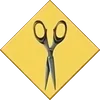
Scissors
Cut the knot. The situation looks impossible, but there is a way out — it just takes a decisive step. The Scissors say something has to be cut away: a relationship, a job, a habit, a person. Sometimes you have to cut off what is dead so that what is alive can grow. In a relationship reading it can mean the connection needs to end. In a work reading it is time to change your job or your direction. Be careful, though: there is no way back. The cards around it will show you where the decisive step leads. Next to the Burning Candles the break makes room for hope. Next to the Heart with a Dagger the cut is painful but necessary.

Skull
Running on empty. Do not be alarmed — this is not about death but about exhaustion, in body and in spirit. You are at your limit, your energy is spent and your nerves are frayed. The card warns that keeping up this pace risks a real collapse or illness. In a work reading it is overwork and burnout. In a reading about wellbeing it is your body sending an SOS. Trace the Skull's line to the other cards — they will show you where the exhaustion comes from. The main thing is not to push on, but to take a break. Next to the Burning Candles there is hope and belief to help you recover. Next to the Scales tiredness is stopping you from deciding anything — rest first.
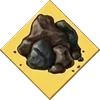
Stone
Obstacles on the way, and not small ones — boulders you cannot walk around. The card speaks of serious difficulty in carrying out your plans, of circumstances pushing back. In a work reading it is trouble with a project or a shortage of resources. In a love reading it is a real obstacle: distance, workload, relatives getting involved. The Stone does not mean impossible — it means a great deal of effort. Stock up on patience and persistence. Next to the Parachute a bold, risky move takes you past the obstacle. Next to the Wreath success is reachable in spite of the difficulty, and the struggle is worth it.

Sun
Life at full strength. Good spirits, energy rising, a season of flourishing and inner strength. The card appears rarely and needs real grounds to show up — you have reason to be glad. In a love reading it means strong, sincere feeling from your partner toward you. In a reading about wellbeing it means energy returning, recovery, vitality. The cards around it will show where the joy comes from. Enjoy this stretch of light and warmth — it does not last forever, but it is worth a great deal. Next to the Skull the energy comes back after a period of exhaustion, and the recovery is going well. Next to the Moon and Stars there is double magic: intuition and energy working together.
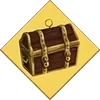
Treasure Chest
Savings and wealth. A very favorable symbol of material wellbeing. This is not simply income but savings, capital, things of value. In a work reading it is a profitable deal or a business that lets you not only earn but keep. In a love reading it can point to material interests in a relationship — yours or someone else's. The card also stands for deliberate spending: investments, big purchases, money put toward the future. Next to the Coffin there are financial losses and the savings plan falls apart. Next to the Road the gain is tied to a move or a journey.
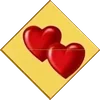
Two Hearts
Love returned. You love and you are loved — a rare and precious thing. The card speaks of a deep emotional bond, the kind where two people understand each other without words. In a relationship reading this is the most favorable sign there is: the feeling runs both ways. Broken Two Hearts point to obstacles in love — distance, circumstances, or someone else getting involved. Notice exactly what divides the halves; that will tell you the nature of the problem. Next to the Key the obstacles are overcome and the love finds its way. Next to the Skull the relationship is taking more than you have to give, and burnout is a real risk.
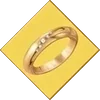
Wedding Ring
A binding promise. For someone unmarried it is a wedding in the period ahead. For someone married it confirms that the marriage is solid, even if there are quarrels right now. Broken rings are a troubling sign: the marriage is losing its value or is under threat. The cards between the halves will show you the cause. In a relationship reading it stands for serious intentions and readiness for a long commitment. This card is not about passion — it is about loyalty and responsibility. Next to the Dove the loyalty is genuine on both sides. Next to the Padlock the commitment is being held up by circumstances outside the two of you.
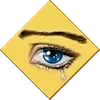
Weeping Eye
Tears and sorrow. The card of setbacks, disappointment, heartache and strain. Something is not going the way you wanted, and it hurts. In a love reading it is heartbreak, quarrels, parting. In a work reading it is a project failing, a job lost, a conflict. The cards around it will show the cause of the tears and how to get through the grief. But remember: crying is not weakness — it is how the heart clears itself and heals. Sometimes you have to cry it out before you can move on. Next to the Burning Candles comfort follows: after the tears come relief and new hope. Next to the Bell the sadness is short and good news is close behind.
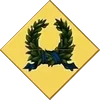
Wreath
Victory. One of the brightest symbols in the deck — a sign of triumph you have earned and recognition you deserve. You have reached what you were working toward, and the result is better than you hoped. In a reading about the year ahead it promises standing and respect in your profession. In a love reading it means a happy ending: a proposal, an engagement, a wedding. The card strengthens the joy of favorable symbols and softens the blow of difficult ones, like a protective charm. A broken Wreath keeps the good news but delays it. Next to the Sun it becomes a double triumph — not simply a win but full recognition. Next to the Two Hearts it is a marriage made for love, the kind that becomes the best part of your life.
Quick answers
Indian Solitaire FAQ
What is Indian Solitaire?
It is a card reading played on a five-by-five grid. Each of the 25 cards is quartered, and every quarter carries one half of a picture, so the deck holds 50 symbols in all. You turn the cards in place until two halves meet and form a whole symbol, then read what that symbol means.
How do I play Indian Solitaire online?
Select “Start the Reading” to deal 25 cards. Look for two neighboring cards, side by side or one above the other, that hold halves of the same picture. Select a card to turn it. When the halves meet, the meaning of that symbol appears under the board.
Can I move the cards around?
No. A card stays where it was dealt and can only be turned. That constraint is the whole game: the order of the deal is your spread, and turning is the only way to reveal what it holds.
What are matched pictures?
They are two cards lying next to each other, horizontally or vertically, whose touching sides hold halves of the same picture. Turn the cards until the halves join into a whole image, and the reading for that symbol opens.
What does a broken symbol mean?
A broken symbol is a picture whose two halves never meet, or that is split by another card between them. It points to a delay, an obstacle, or a complication in whatever the symbol stands for. Read the cards between the halves to see what is getting in the way.
How far ahead does the spread look?
The five rows are usually read as the weeks ahead, roughly one to two months in total: the first row covers the coming week, the second the next, and so on down to the fifth row and beyond.
How often should I do a reading?
Once a day is plenty, and once per question is better still. Dealing the same question over and over until you like the answer tells you more about what you were hoping for than about what is coming.
Is Indian Solitaire really from India?
Its symbols and its number play sit comfortably in Indian tradition, but nobody can date the deck or trace it to a single place. It has been laid out at kitchen tables across Eastern Europe for generations, which is why you also see it called old-time or ancient solitaire.
Is the reading accurate?
The deal is random. Treat it as a way to think, not as a forecast, and use your own judgment for anything that matters. For health, money, legal, or safety decisions, ask a qualified person.
More Readings
Free Runes Reading
Draw the old Norse symbols and read what they answer.Get Your Free Reading >
I Ching
Toss six coins and let the Book of Changes answer.Get Your Free Reading >
Coffee Reading
Read the shapes left in the bottom of the cup.Get Your Free Reading >
Magic 8 Ball Online
Ask a yes-or-no question. Get one of the 20 classic answers.Ask the Magic 8 Ball >

Card meanings and reading guide for Indian Solitaire by Marta Winter, astrologer and Tarot reader. Interactive board and match logic by Martin Punans, game and web app developer.
Free Readings

All Divinations

Fortune Telling

Tarot Readings 1000 Qs

Tarot Master

Free Love Tarot

Coffee Reading

Fortune Cookies

Magic 8 Ball

Indian Solitaire

Free Runes Reading

I-Ching

Love Compatibility
Daily Tarot Reading

Daily Rune

Yes/No Rune Reading
Celtic Cross Free

Daisy Love Oracle

Octopus Predictor

Yes/No on a Coin

Wish Tree

Heads or Tails?
Yes/No Tarot

Lucky Cat
Tarot Card Meaning

All Cards Meaning

The Fool

The Magician

The High Priestess
The Empress

The Emperor
The Hierophant

The Lovers

The Chariot

Strength

The Hermit

Wheel of Fortune

Justice
The Hanged Man

Death

Temperance

The Devil
The Tower

The Star

The Moon

The Sun
Judgment

The World
Ace of Swords
Two of Swords

Three of Swords

Four of Swords
Five of Swords
Six of Swords
Seven of Swords
Eight of Swords
Nine of Swords
Ten of Swords
Page of Swords

Knight of Swords
Queen of Swords
King of Swords

Ace of Cups
Two of Cups
Three of Cups
Four of Cups

Five of Cups
Six of Cups
Seven of Cups
Eight of Cups
Nine of Cups
Ten of Cups
Page of Cups

Knight of Cups
Queen of Cups
King of Cups

Ace of Pentacles

Two of Pentacles

Three of Pentacles

Four of Pentacles
Five of Pentacles

Six of Pentacles

Seven of Pentacles

Eight of Pentacles
Nine of Pentacles
Ten of Pentacles

Page of Pentacles

Knight of Pentacles
Queen of Pentacles

King of Pentacles
Ace of Wands
Two of Wands
Three of Wands
Four of Wands
Five of Wands
Six of Wands
Seven of Wands
Eight of Wands

Nine of Wands
Ten of Wands

Page of Wands

Knight of Wands

Queen of Wands

King of Wands
more cards
close
Daily Horoscope

Daily Horoscope: Today

Daily Horoscope: Tomorrow
Daily Love Horoscope

Weekly Horoscope
2027 Yearly Horoscope
2026 Yearly Horoscope
Zodiac Signs Traits

All Zodiac Signs

Aries Traits

Taurus Traits

Gemini Traits

Cancer Traits

Leo Traits

Virgo Traits

Libra Traits

Scorpio Traits

Sagittarius Traits

Capricorn Traits

Aquarius Traits

Pisces Traits
more signs
close
Your
Daily
Horoscope
Daily
Horoscope